
An 'Event-driven Process Chain' (EPC) is a modeling language you can use to describe business processes and workflows. EPCs represent processes as logical sequences of events and functions and are a core part of the ARIS methodology.
What is an Event-driven process chain (EPC)?
An Event-driven process chain (EPC) is a graphical notation for modeling business processes, analyzing them, and identifying potentials improvement. Event-driven process chains are used in many industries and are supported by different tools. For example, the ERP provider SAP uses EPC diagrams to document the processes of their SAP R/3 solution.
A simple event-driven process chain may look as follows:
%20(002).PNG)
Figure 1: Example of an EPC
Within Business Process Management (BPM), EPCs provide a clear and intuitive way to capture how processes behave in real business scenarios. Their event-oriented structure helps stakeholders understand why a process step occurs and what triggers the next action.
Elements of an EPC model
An Event-Driven Process Chain models business processes using three core elements: Event, Function, and Connectors (XOR /AND/OR).
Download our free cheat sheet EPC in ARIS to learn more.

Figure 2: EPC in ARIS cheat sheet
Rules for EPC modeling
The beginning and the end of every event-driven process chain is always illustrated by an EPC event.
An event is defined by the conditions that must be met to start and end the process.
Multiple functions can follow each event or multiple events can follow each function, but there must be linked by graphical connectors ('OR', 'AND', or 'XOR').
The following table shows how you can use the various elements of an event-driven process chain:
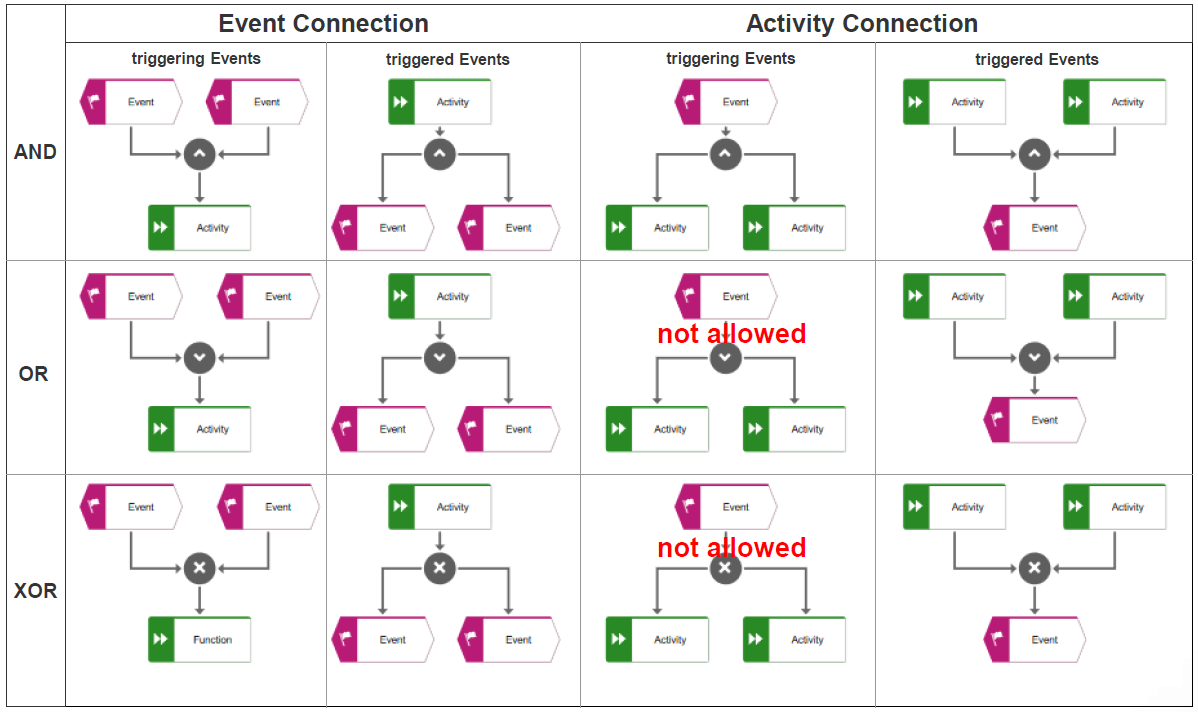
Figure 3: EPC modeling - connection rules
History of Event-driven process chains (EPC)
EPCs were invented back in 1992 by Prof. Scheer and colleagues at the University of Saarland. Since then, they have seen an industry-wide adoption.
Example Event-driven process chain
EPC diagrams visually highlight the cause-and-effect relationships that drive process behavior.

Figure 4: How to model EPC using EPC and ARIS
EPC is often compared with Business Process Model and Notation (BPMN). This blog post on EPC vs. BPMN provides practical insights to help you choose the right process modeling approach for your use case. Or you can watch this BPMN vs EPC video.
EPC modeling in ARIS
EPCs can be created using ARIS Basic or ARIS Advanced.
With smart modeling feature, ARIS Basic helps you to have an easy start into the world of process modeling. Design the most common EPC constructs such as branches or loops in seconds. Get your free ARIS and check some video tutorials. Also, you can share your models and discuss them with other users in our Forums.
For advanced modelers, here is a blog post about the integration of EPC with process mining data.